
Industrial Steel Storage Tanks Saudi Arabia
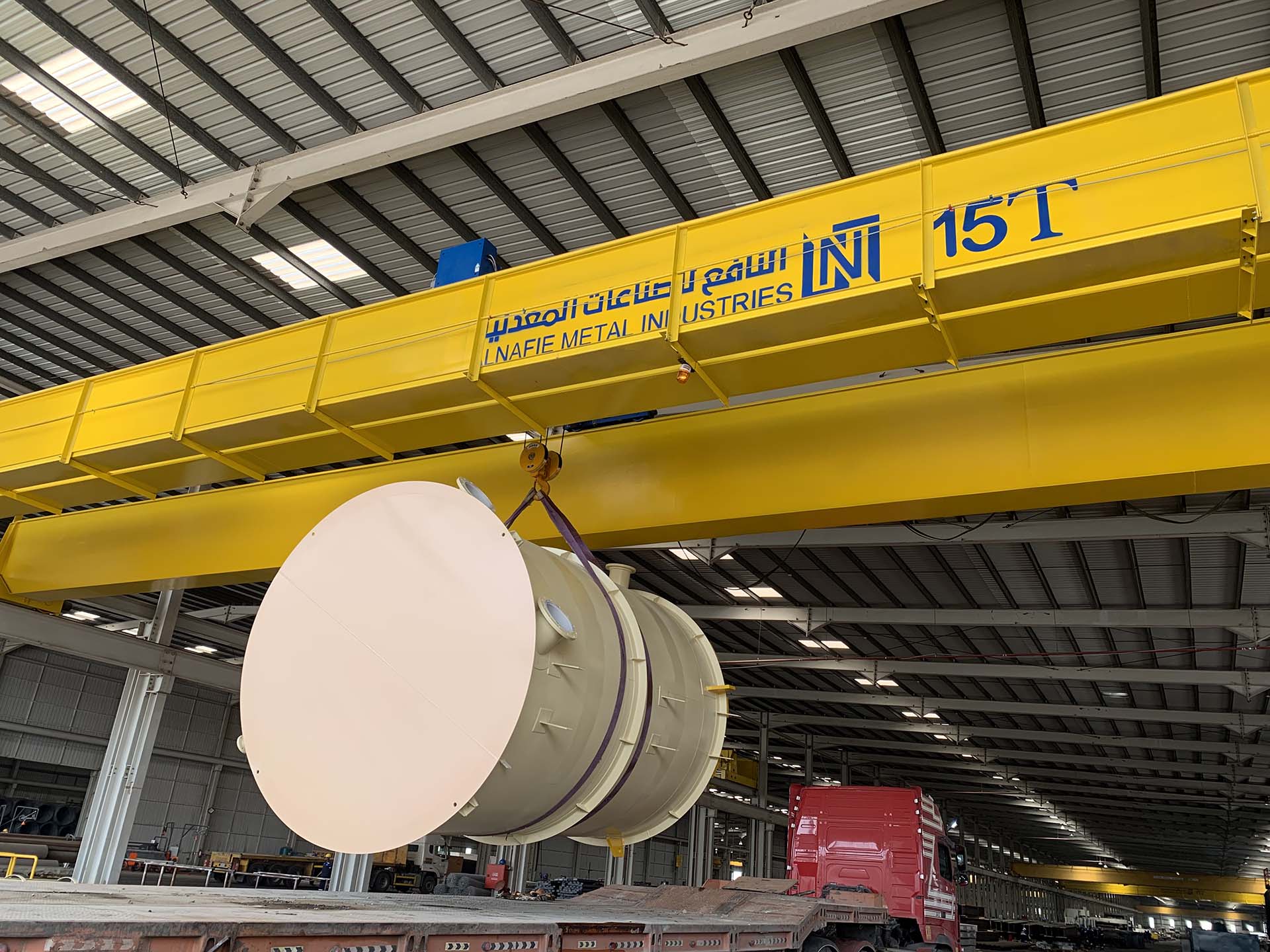
Steel storage tanks are critical assets in any facility that handles fuels, water, industrial liquids or chemicals under safe, controlled conditions. Across oil & gas, petrochemicals, power generation and desalination, properly engineered tanks protect operations from leakage, contamination and downtime. At Al Nafie Industries, we design and fabricate industrial steel storage tanks tailored to each project’s stored material, operating conditions and regulatory requirements.
What Are Industrial Storage Tanks?
An industrial storage tank is an engineered, welded steel vessel built to hold large volumes of liquid or gas. Unlike off-the-shelf water tanks, these are not standard products — they are engineered assets whose design directly affects operational safety, efficiency and code compliance. The stored material (crude oil, diesel, water, LPG, chemicals), the operating pressure and the site conditions all dictate the plate thickness, roof type, corrosion allowance and foundation.
Most field-erected tanks are built from low-carbon steel plates — shell plates form the cylindrical wall, bottom (and annular) plates form the floor, and roof plates close the top. Each plate type plays a distinct structural role, which is why fabrication precision and welding quality are so important.
Types of Steel Storage Tanks We Fabricate
By Roof Type
We supply open-top, fixed-roof (flat, cone, dome and self-supporting) and floating-roof tanks (internal and external), including aluminium dome roofs. Floating roofs reduce vapour loss for volatile products, while fixed roofs suit water and many process liquids.
By Orientation & Position
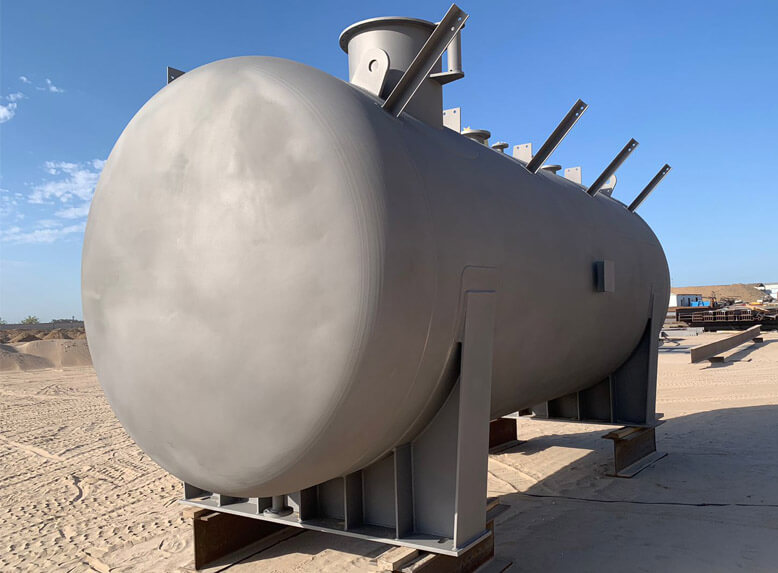
Vertical and horizontal tanks, above-ground and (where required) buried configurations — selected according to capacity, footprint and the stored product.
By Material
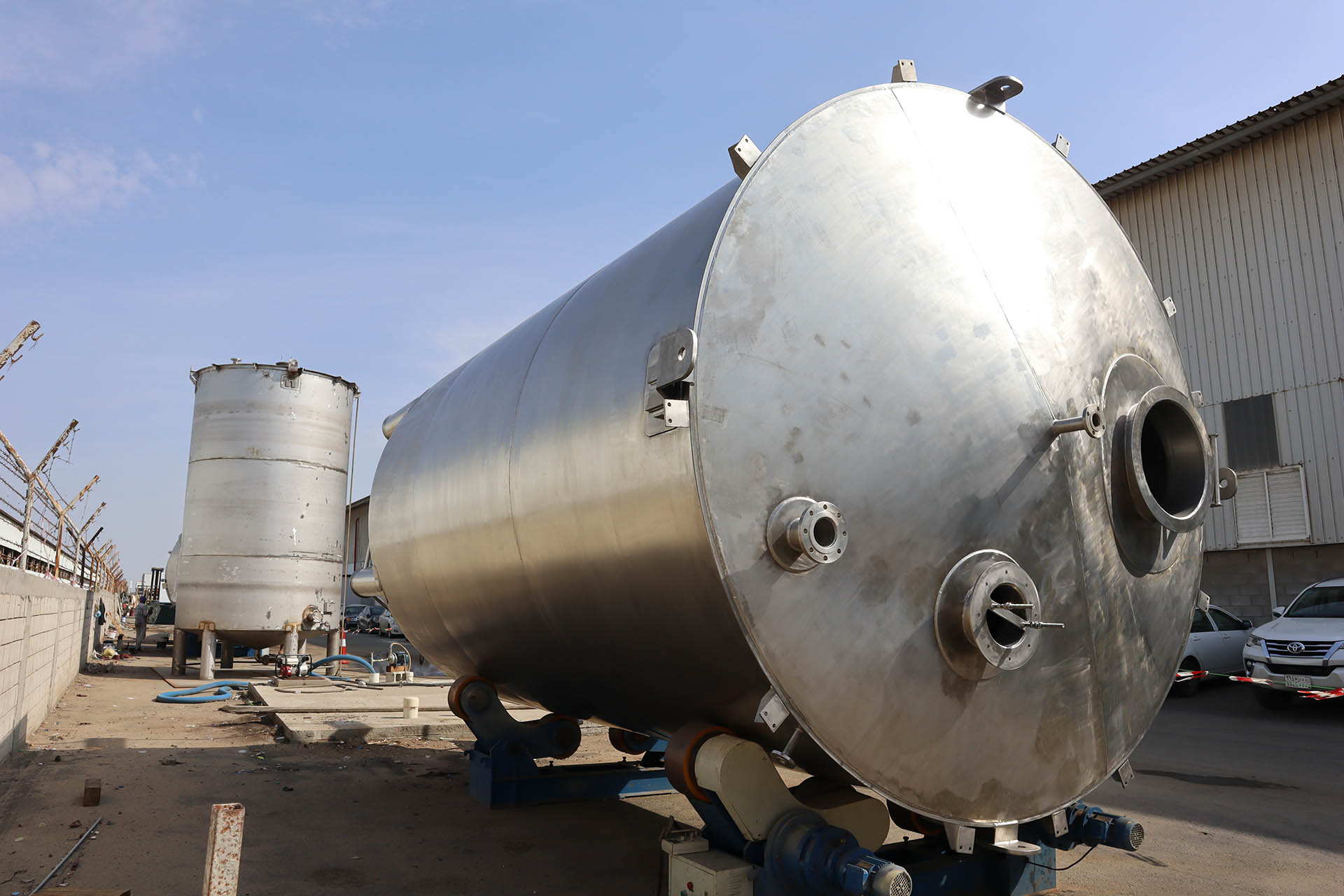
Carbon-steel tanks for fuel, water and general process duty, and stainless-steel storage tanks for corrosive media, food-grade and high-purity applications where hygiene and corrosion resistance are essential.
Standards & Code Compliance
Tank integrity depends on strict adherence to international codes. Al Nafie fabricates storage tanks to:
- API 650 — welded steel tanks for atmospheric (low-pressure) storage.
- API 620 — large, low-pressure tanks operating up to ~15 psi.
- AWWA D100 — welded steel tanks for water storage.
- API 653 — inspection, repair and reconstruction of in-service tanks.
All tanks are manufactured in line with the specifications of major Saudi entities — Saudi Aramco, the Saudi Electricity Company (SEC) and SABIC — and supported by our quality certifications, ensuring suitability for large-scale, high-risk environments.
Applications
- Crude oil, diesel and fuel storage for oil & gas facilities
- Water storage for desalination and municipal infrastructure
- Chemical and petrochemical liquid storage
- Process and buffer tanks for power and industrial plants
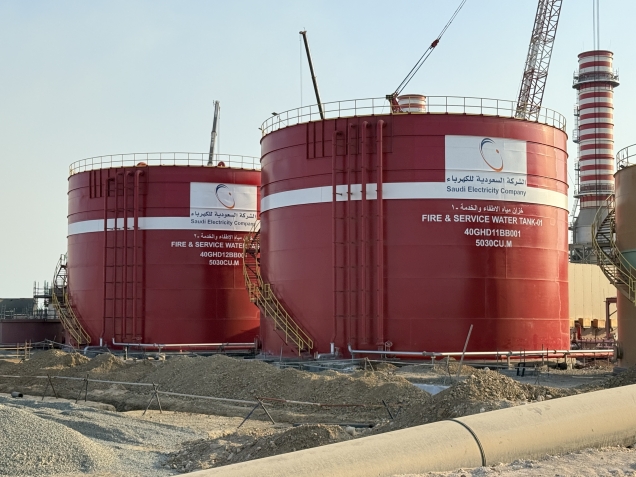
Our capability extends to large-diameter water infrastructure — including field-erected tanks measuring tens of metres in diameter — as shown across our project portfolio.
Choosing the Right Storage Tank for Your Application
Selecting the right tank starts with the product and the duty. For volatile fuels, a floating-roof tank minimises vapour loss; for water and many process liquids, a fixed cone or dome roof is efficient and economical. Capacity and footprint decide diameter and height, while the operating pressure determines whether an atmospheric API 650 tank or a low-pressure API 620 design is required. Corrosive or high-purity media point to stainless steel or a suitable internal lining. Site conditions — soil, seismic zone and access — shape the foundation and erection method. Our engineers weigh all of these factors together and recommend the configuration that balances safety, compliance, lifespan and cost, instead of forcing a one-size-fits-all product onto your project.
Tank Foundations: Ring Wall vs Earth Foundation
A storage tank is only as reliable as the ground beneath it. For larger tanks on variable soil, a reinforced concrete ring wall distributes shell loads and improves stability. Where the soil is firm and well-compacted, a simpler earth (compacted granular) foundation can be used, typically for smaller, lower tanks. The foundation type is selected during engineering based on geotechnical data, tank diameter and the stored product — and it directly affects settlement, longevity and total cost.
Tank Sizing, Capacity & Accessories
Capacity is set by the operational need, available footprint and code limits. Beyond the shell, bottom and roof, a complete tank includes engineered accessories: nozzles and manways for access and connection, spiral or straight stairways and platforms, gauging and level instrumentation, vents and, for floating-roof tanks, seals and drain systems. We design these details to suit the product and the client’s operating procedures so the tank is safe and easy to operate from day one.
Corrosion Protection & Coatings
Corrosion allowance is added to plate thickness based on the stored product’s water, salt and sulphur content. On top of that, internal linings and external coating systems are specified to match the service — from epoxy linings for aggressive media to weather-resistant external paint. Proper surface preparation (abrasive blasting) before coating is critical to coating life and to the long-term integrity of the tank.
What Affects Tank Fabrication Cost & Lead Time?
Several factors shape the budget and schedule of a storage tank project:
- Diameter, height and capacity — larger field-erected tanks need more plate, welding and erection time.
- Material grade — carbon steel versus stainless steel for corrosive or high-purity duty.
- Roof type — floating roofs add mechanism and sealing cost over fixed roofs.
- Design pressure and code — API 620 low-pressure designs differ from atmospheric API 650 tanks.
- Foundation and site access — ground conditions and logistics influence both cost and timeline.
Why Choose Al Nafie for Steel Storage Tanks?
Al Nafie is a one-stop steel fabrication partner with 30+ years in the Kingdom. We hold ASME U-Stamp capability for pressure equipment and run advanced fabrication lines — including automatic girth welding for large-diameter tanks. Beyond tanks, we fabricate pressure vessels, steel structures and piping & pipe spools, and our metal rolling service forms shells for tanks and cylindrical components in-house.
- Compliance with API 650/620, AWWA D100, ASME and Aramco/SEC/SABIC specs.
- Turnkey scope: engineering, fabrication, painting, testing, delivery and erection.
- Customisation by stored material, roof type and site conditions.
- Proven delivery on critical water, energy and industrial projects.
Storage Tanks and Saudi Industrial Growth
Saudi Arabia’s expansion in energy, water and petrochemicals is driving sustained demand for reliable storage tanks. New refineries, desalination plants and national water-transmission networks all depend on field-erected tanks built to international codes. Al Nafie has fabricated and erected large-diameter steel storage tanks for critical water infrastructure — including tanks tens of metres in diameter designed for long-term municipal service — and produces ASME U-Stamp pressure equipment for petrochemical clients. As the Kingdom localises industrial manufacturing under Vision 2030, partnering with a Saudi fabricator that already meets Aramco, SEC and SABIC specifications keeps your project compliant, reduces import lead times and protects your schedule.
Our Process: From Design to Hydrotest
- Engineering and tank design per applicable code.
- Material procurement with full traceability.
- Plate rolling, fit-up and certified welding.
- Surface preparation, blasting and protective coating.
- Field erection, inspection and hydrostatic testing.
Conclusion
High-quality steel storage tanks are a strategic investment for any facility operating in demanding industrial environments. With proven expertise and strict code compliance, Al Nafie Metal Industries delivers tank solutions that support safe operations and long-term performance. Contact us for a technical consultation and a customised quotation for your storage tank project.
Frequently Asked Questions
What is the difference between API 650 and API 620 tanks?
API 650 covers welded steel tanks for atmospheric (near-zero pressure) storage, while API 620 covers larger low-pressure tanks operating up to about 15 psi. The choice depends on the internal pressure and stored product.
Which is better — a steel tank or a plastic tank?
For industrial volumes, fuels, chemicals and high-temperature or pressurised duty, welded steel tanks are far stronger, more durable and code-compliant. Plastic tanks suit small, low-risk domestic water storage.
What roof types are available for storage tanks?
Common options include open-top, fixed roofs (flat, cone, dome, self-supporting) and floating roofs (internal and external). Floating roofs reduce vapour loss for volatile liquids.
How are storage tanks inspected and maintained?
In-service tanks are inspected, repaired and reconstructed under API 653, covering the floor, shell, roof, nozzles and welds — through both external (in-service) and internal (out-of-service) inspections.
Can Al Nafie build large-diameter and stainless-steel tanks?
Yes. Al Nafie fabricates large-diameter field-erected tanks as well as stainless-steel storage tanks for corrosive and high-purity applications, with turnkey design, fabrication and erection.
