Manufacturing industries in Saudi Arabia sit at the point where raw materials become the products every other sector depends on.
Their reach extends well beyond the factory floor — into construction, energy, oil and gas, water, and transport.
And as the Kingdom pursues economic diversification, higher local content and stronger supply chains, manufacturing has become one of the clearest opportunities available to investors, plant operators and industrial buyers.
This guide covers what the sector is, how it is structured, why it matters to the Saudi economy, where metal fabrication fits, and where the sector is heading.
What Are Manufacturing Industries?
Manufacturing industries take raw materials or primary inputs and convert them into new products — either finished goods, or intermediate products that feed into further production.
The process runs in a predictable sequence:
Raw materials and inputs → processing and fabrication → intermediate or finished product → distribution and use.
A single product often passes through several manufacturing stages before it reaches its end user. Metals become fabricated components; those components then go into a factory, a power plant or an infrastructure project.
That chaining effect is what makes the sector economically powerful. One factory rarely serves one customer — it sits inside a value chain that touches many others.
Extractive vs Manufacturing Industries: What’s the Difference?
The distinction comes down to what the activity does with the resource.
Extractive industries remove resources from their natural source — oil, gas, and minerals. The value created is in getting the resource out of the ground.
Manufacturing industries process those materials and transform them into products with new applications and higher value.
The practical consequence matters more than the definition. Under an extraction-led model, economic value stops at the point of export. Under a manufacturing-led model, value continues to compound through processing, fabrication, and the industries that buy the output.
This is precisely the shift Saudi Arabia has been pursuing for the past decade.
Why the Sector Matters to the Saudi Economy
The numbers show a sector that has grown substantially but still has room to run.
According to the NIDLP annual report for 2024, reported by the Saudi Press Agency, the program’s activities contributed 39% of the Kingdom’s non-oil GDP that year, reaching SAR 986 billion — up from SAR 949 billion in 2023. Non-oil activities now represent 55% of total GDP.
Manufacturing Industries specifically grew by 4% over the year, while non-oil exports reached SAR 514 billion, a 13.2% increase on 2023.
Beyond the headline figures, the sector delivers in five distinct ways.
Economic diversification. Industrial growth widens the base of the economy and opens new avenues for production and investment, rather than concentrating activity in a single source.
Higher value from local resources. Converting raw materials into manufactured goods captures value at multiple points along the chain instead of only at extraction.
Stronger local supply chains. Factories capable of producing materials and components inside the Kingdom give projects more sourcing options and shorter lead times.
Support for adjacent sectors. Construction needs fabricated metal products and building materials. Energy projects need equipment and components. Oil and gas needs specialized industrial solutions.
Investment opportunity. A wider manufacturing base creates openings in finished and intermediate products, supply, engineering services, maintenance, and industrial technology.
Types of Manufacturing Industries in the Kingdom
The sector divides by input material, end product, and the industries served.
Metal Fabrication
Metal fabrication is directly tied to construction, energy, infrastructure, and industrial projects — which is what makes it one of the more consequential subsectors.
Typical output includes:
- Steel structures and industrial buildings
- Products fabricated from carbon steel and alloy steel
- Storage tanks and pressure vessels
- Transmission towers
- Industrial equipment and installations
- Custom-fabricated components built to project specification
- Cutting, forming and welding services
These products demand precision in both design and execution, the right material selection, and adherence to the technical specification for each project.
Specialist manufacturers such as Alnafie Metal Industries supply fabricated metal solutions to industrial projects and facilities across the Kingdom, engineered to the requirements of each individual scope.
Chemical Industry
Covers a wide range of materials and products that feed other industries — industrial chemicals, coatings, polymers, and specialty compounds.
Its close integration with other industrial activity makes it a significant link in the Kingdom’s value chain.
Food Processing
Covers the manufacture and processing of food and beverages, and the conversion of agricultural and livestock output into consumer-ready goods or inputs for further production.
Plastics Industry
Plastic products serve packaging, construction, and industrial applications, with output varying by polymer type and end use.
Pharmaceutical Manufacturing
Covers medicines, medical preparations, and healthcare-related products — an area with clear scope for expanding domestic production and specialized industrial capability.
Building Materials
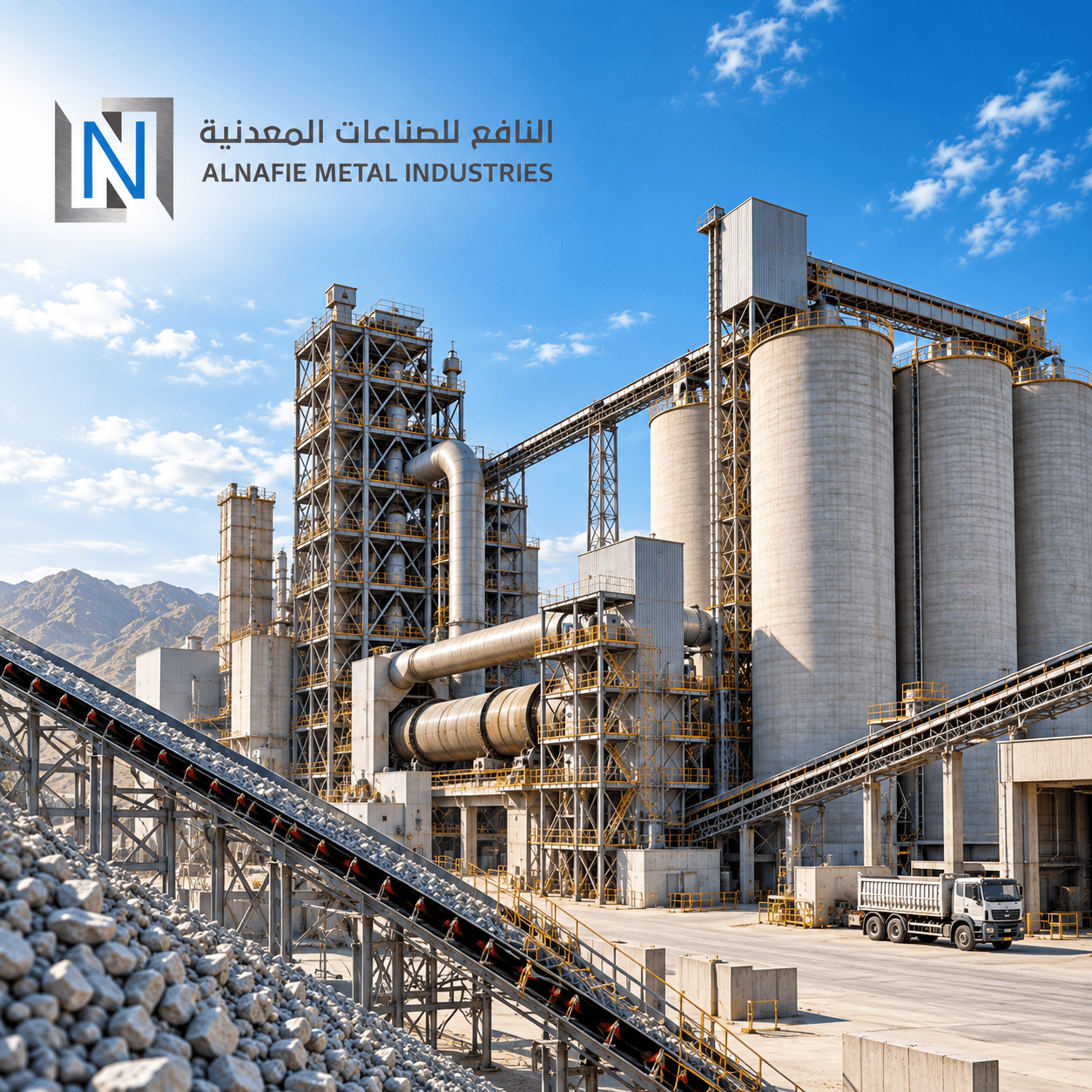
Products used in construction and infrastructure, including insulation materials, cement-based products, and fabricated metal components.
Demand here tracks directly with the volume of construction and infrastructure work underway.
Machinery and Equipment Manufacturing
Covers the equipment, machinery and components that factories and projects require for production and operation — a subsector central to deepening local industrial capability.
Where Metal Fabrication Fits Into the Wider Sector
Fabricated metal products are unusual in that they are not confined to one downstream industry. They appear across nearly every industrial and infrastructure project.
Building a factory requires steel structures, tanks, fabricated components, equipment, and a range of fabrication services. The same holds for a power plant, a water facility, or a processing complex.
The practical implication: growth in manufacturing industries in Saudi Arabia creates continuous, structural demand for metal fabrication capability.
Steel Structures and Industrial Buildings
Steel structures are used in factories, warehouses and industrial facilities, with selection driven by project type, loads, design, and specification.
These projects demand accurate drawing interpretation, material preparation, cutting, assembly, welding and inspection through to the finished product.
Storage Tanks
Different sectors require storage tanks for water, chemicals, liquids and industrial products. Design varies considerably with the stored medium and the project’s operating requirements.
Related to this is static equipment — pressure vessels, heat exchangers and process equipment built to ASME and API codes.
Transmission Towers
Transmission towers are a core component of power transmission and distribution networks. Fabricating them demands precision in design and production, along with careful attention to environmental protection.
One example is the Abha electricity towers project, delivered by Alnafie Metal Industries as part of its work fabricating metal products and structures for industrial and infrastructure projects.
Cutting and Forming
Cutting and forming are foundational stages in fabricating most metal products and structures.
Where a project demands tight dimensional accuracy and fine detail, laser cutting is selected according to material type, design and specification.
Corrosion Protection
Metal products and installations are exposed to conditions that cause corrosion, particularly in humid or high-salinity environments.
Techniques such as hot-dip galvanizing protect carbon steel and extend operational life in line with project requirements.
Work of this kind is carried out through integrated steel fabrication facilities that keep cutting, forming, welding and surface treatment under one point of control.
Which Sectors Depend on Local Manufacturing?
The sector operates as part of an interconnected system, not as a standalone activity.
Oil and gas requires extensive equipment, fabricated metal products, chemicals and engineered solutions — generating continuous demand on local manufacturers and suppliers.
Construction draws on everything from building materials through to structural steel, fabricated products and equipment. Piping works and structural fabrication feature in most industrial builds.
Power and utilities need towers, structures, equipment and fabricated components across generation and distribution.
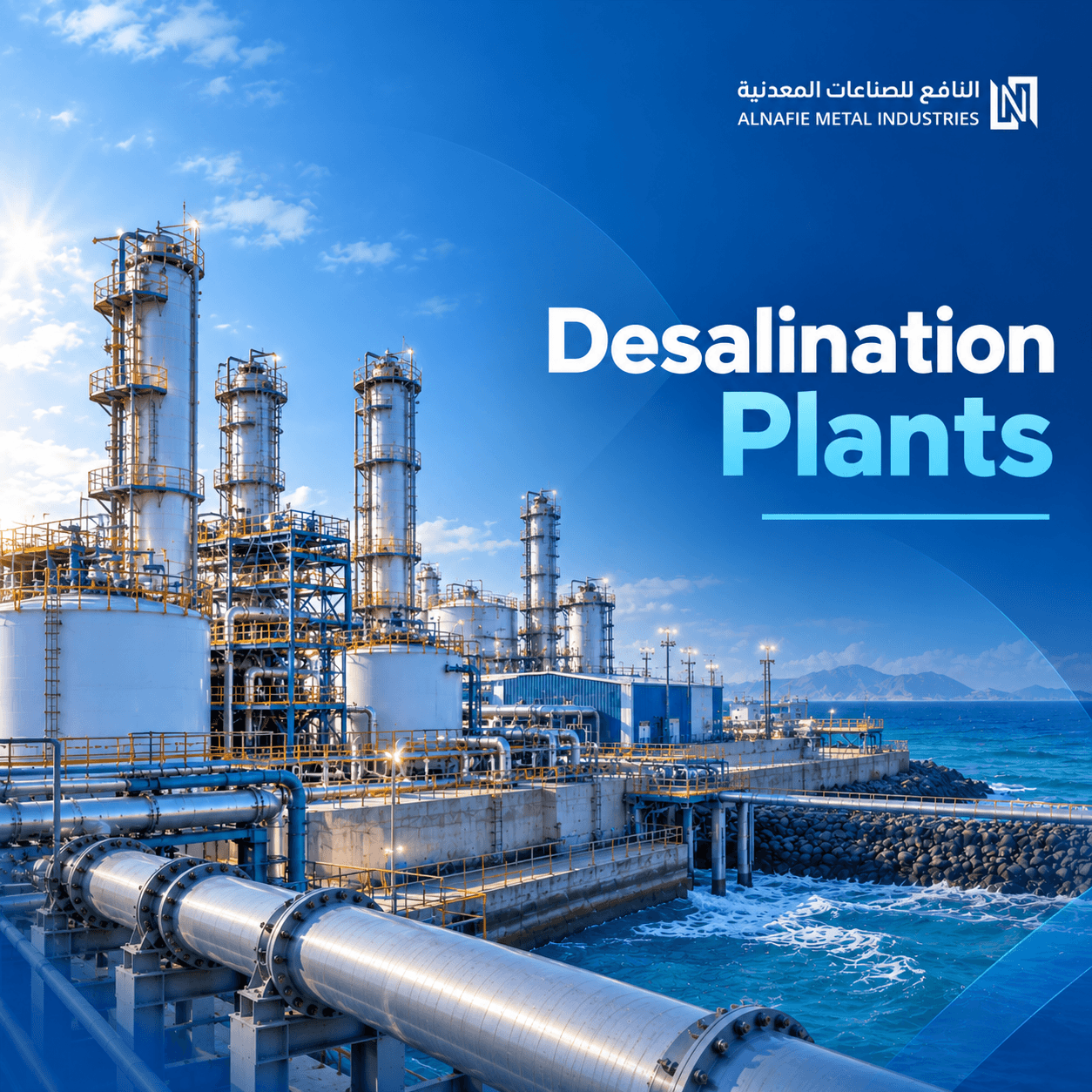
Water and desalination depends on tanks, equipment, systems and industrial components, tying it directly to local fabrication capability.
Transport and logistics requires vehicles, equipment, components, spare parts and infrastructure.
The result is a chain running from raw materials and inputs, through manufacturing, to intermediate and finished products, and finally to the projects and sectors that consume them.
Vision 2030, NIDLP and Made in Saudi
Three initiatives shape the policy environment, and buyers and investors should know how they differ.
Saudi Vision 2030 sets the overall direction: diversify the economy, raise investment, and improve the competitiveness of non-oil sectors.
NIDLP — the National Industrial Development and Logistics Program, launched in 2019 — is the delivery vehicle. It integrates industry, mining, energy and logistics into a single program, with local content and Fourth Industrial Revolution principles built into its mandate.
Made in Saudi is the official identity for promoting locally manufactured products domestically and internationally.
The scale of ambition is documented. The National Industry Strategy, launched in October 2022, targets nearly 36,000 factories by 2035. For context, the Kingdom built 7,206 factories over forty-two years before Vision 2030, and had reached 10,640 industrial facilities by 2022.
For manufacturers, this translates into rising local production, deeper supply chains, higher local content, and new openings for industrial investment. A strong manufacturing base also helps companies build technical and engineering capability that the market can then draw on.
Local Content: Why It Now Decides Contracts
This is the section most international suppliers underestimate.
Local content in Saudi Arabia is not a general aspiration — it is a procurement criterion with measurable weight in tender evaluation.
Aramco’s IKTVA program is the clearest example. In February 2026, Aramco announced that IKTVA had reached its 70% local content target, and set a new goal of 75% by 2030.
The practical effect for anyone buying or supplying industrial goods:
Where a component is manufactured affects eligibility, not just price. Two technically identical bids can be scored differently based on in-Kingdom value added.
In-Kingdom fabrication shortens lead times and allows inspection during production rather than discovering non-conformance when an imported shipment arrives.
Documentation is part of the deliverable. Material traceability and certification are checked at handover regardless of how the product performs.
When comparing suppliers, ask where fabrication physically takes place — not simply where the company is registered. Verified certifications and a documented project record are what distinguish a qualified supplier from a trading intermediary.
Challenges Facing Saudi Manufacturers
The opportunity is real, but so are the constraints.
Production cost. Raw materials, energy, labor, transport, maintenance and technology all feed into cost, requiring active cost management and continuous efficiency improvement.
Supply chain reliability. Delayed materials or components affect production and delivery schedules, which has made supply chain management a core competency rather than a support function.
Skills and expertise. Advanced manufacturing depends on engineers, technicians and skilled operators with specialized capability in production, fabrication and quality.
Technology. Manufacturing technology moves quickly, and investment in automation, digital systems and data analysis has become a prerequisite for productivity gains.
Quality and specification compliance. As projects grow more complex, adherence to technical specifications and quality standards becomes more demanding — particularly for products going into energy, infrastructure and industrial applications.
The Future: Automation, AI and Smart Factories
The direction of travel combines industrial capacity with modern technology, with continued emphasis on efficiency and local product development.
Industrial automation improves production speed, reduces repeat errors, and raises operational efficiency.
Artificial intelligence is applied to production data analysis, defect detection, failure prediction, and process optimization.
Smart factories combine sensors, data, digital systems and automation to give clearer visibility over production and enable faster decisions.
Sustainable manufacturing — energy and material efficiency, waste reduction, and byproduct management — has become central to modern industrial development.
Deeper local content. The more local factories can supply products, components and services, the more integrated domestic supply chains become.
How Manufacturers Can Compete
If you operate a plant or industrial facility, capturing the growth in manufacturing industries in Saudi Arabia depends on competitiveness, not output volume alone.
- Improve process efficiency and reduce waste in both materials and time.
- Invest in technology suited to your actual production profile.
- Strengthen quality systems and in-process product control.
- Develop local suppliers and build long-term relationships with them.
- Improve inventory management to cut cost and avoid material shortages.
- Build workforce skills across technical and engineering teams.
- Track the technical specifications and requirements of your target projects.
- Diversify products where manufacturing capability allows.
- Form industrial partnerships with companies, suppliers and customers inside the Saudi market.
For projects that depend on fabricated metal products, selecting a manufacturer with the right technical and production capability is what determines whether quality, precision and schedule requirements are actually met.
Manufacturing industries in Saudi Arabia are no longer simply a means of producing goods. They function as an interconnected industrial system serving multiple sectors and enabling the development of local products and supply chains.
As industrial, infrastructure and energy projects continue to expand, demand grows for manufacturers capable of delivering to a high standard of quality and precision, and to the technical specification of each individual project.
Metal fabrication occupies an important position within that system, given how many projects depend on structures, installations, tanks, towers and fabricated components.
Which is why working with an industrial partner that has the experience and capability to execute a project’s metal scope matters as much as any other procurement decision.
Alnafie Metal Industries provides fabrication solutions for metal products and installations on industrial projects, with focus on project requirements, technical specification and execution quality. Delivered examples are available in our projects.
If your project requires structures or fabricated metal products built to specification, contact our team to identify the right solution for your scope.
Frequently Asked Questions
What are manufacturing industries?
Manufacturing industries convert raw materials or primary inputs into new products, either finished goods for direct use or intermediate products that feed into further production. They differ from extractive industries, which remove resources from their natural source without transforming them into new applications.
What are the main manufacturing industries in Saudi Arabia?
The sector spans metal fabrication, chemicals, food processing, plastics, pharmaceuticals, building materials, and machinery and equipment manufacturing. Metal fabrication and chemicals are among the most established, given their links to construction, energy and infrastructure activity across the Kingdom.
Why is manufacturing important to the Saudi economy?
It supports economic diversification, captures higher value from local resources, strengthens domestic supply chains, supplies the products other sectors require, and creates industrial and investment opportunities. NIDLP activities contributed 39% of non-oil GDP in 2024, according to the program’s annual report.
What is the difference between extractive and manufacturing industries?
Extractive industries obtain resources from their natural source, such as oil, gas and minerals. Manufacturing industries process those materials and inputs and transform them into new products. Value stops at export under an extraction model, but compounds through processing under a manufacturing model.
What is NIDLP?
The National Industrial Development and Logistics Program, launched in 2019, is the Vision 2030 delivery program covering industry, mining, energy and logistics. It integrates these four sectors under a single mandate, with local content and Fourth Industrial Revolution adoption built into its objectives.
Why does local content matter for industrial suppliers?
Local content is a scored criterion in Saudi procurement, not just a policy goal. Programs such as Aramco’s IKTVA weight tender decisions toward suppliers with higher in-Kingdom value added, meaning where a component is fabricated can affect eligibility independently of price or technical merit.
What is the future of Manufacturing Industries in Saudi Arabia?
The direction points toward expanded domestic manufacturing, automation, digital transformation, artificial intelligence in production, improved efficiency, and deeper supply chains and local content. The National Industry Strategy targets close to 36,000 factories by 2035.
about
Alnafie Metal Industries
AlNafie Metal Industries is a leading private company with 33 years of experience in Saudi Arabia’s development. Specializing in steel construction and tank rehabilitation, NMI provides full steel fabrication and erection services for major EPC projects, including power, gas, petrochemical, industrial, and commercial sectors.