Steel is everywhere in a Saudi project, from the rebar inside a villa slab to the stainless tank in a dairy plant and the galvanized towers carrying power lines across Asir. Yet “steel” is not one material. Change the carbon by a fraction of a percent, add chromium or zinc, or heat-treat it differently, and you get a completely different product with different strength, weldability and corrosion life.
This guide explains the main types of steel in plain terms: how they are classified, what each one is good at, where it fails, and how to choose the right steel grade for construction and industrial work in the Kingdom. It also covers the iron family (cast iron and wrought iron) because buyers often mix the two up.
Iron vs Steel: What Is the Difference?
Iron is the base element. On its own it is relatively soft and rusts quickly, so it is rarely used pure. Steel is iron combined with a controlled amount of carbon, roughly 0.05% up to about 2%, plus small amounts of manganese and other elements.
Above about 2% carbon the material is no longer steel but cast iron, which is harder and easier to cast into shapes, but brittle. Below that, carbon makes steel stronger as it rises, while reducing its ductility and weldability.
So when people ask whether steel or iron is stronger, the practical answer is that steel is far stronger in tension and handles impact much better than pure iron or cast iron. That is why almost every structural member, pipe and plate you see on site is steel.
If you want the manufacturing side of the story, including the difference between a steel mill and a fabrication shop, see our steel fabrication buyer guide for Saudi Arabia.
How Steel Is Classified
There is no single list of steel types, because steel can be grouped in several ways. The most useful ones for buyers and engineers are:
- By chemical composition: carbon steel, alloy steel, stainless steel and tool steel. These are often called the four types of steel.
- By carbon content: low, medium and high carbon steel.
- By product form: plates, sheets, beams, bars, rebar, pipes and hollow sections.
- By surface protection: black (uncoated), galvanized, painted or epoxy coated.
- By standard and grade: for example ASTM A36, S275, S355, A615 Grade 60 or 304 stainless.
The rest of this guide walks through each group.
Need steel for your project? Get a quote from Alnafie today.
Alnafie Metal Industries
Metal fabrication in Jeddah · 500+ employees · 144,000 m² of facilities
ISO 9001 • ISO 14001 • ISO 45001 • ASMEThe 4 Types of Steel
Most references describe four main types of steel based on chemistry. Here is a quick comparison before we go deeper:
| Type | What defines it | Key strengths | Typical uses |
|---|---|---|---|
| Carbon steel | Iron plus carbon, little else | Cheap, strong, easy to weld (low carbon grades) | Structures, plates, pipes, rebar |
| Alloy steel | Added chromium, molybdenum, nickel, vanadium | Higher strength, toughness, heat resistance | Pressure vessels, shafts, gears |
| Stainless steel | At least 10.5% chromium | Corrosion resistance, hygiene | Tanks, food plants, desalination |
| Tool steel | High carbon plus tungsten, vanadium, molybdenum | Extreme hardness and wear resistance | Dies, moulds, cutting tools |
1. Carbon Steel
Carbon steel is the most used type of steel in the world and in Saudi construction. Its properties depend mainly on carbon content:
- Low carbon steel (mild steel): below about 0.3% carbon. Easy to cut, bend and weld. Most beams, angles, channels, sheets and structural pipes are mild steel.
- Medium carbon steel: about 0.3% to 0.6% carbon. Stronger, can be hardened by heat treatment, but needs preheating and controlled cooling when welded. Used for axles, gears and machine parts.
- High carbon steel: above about 0.6% carbon. Very hard and wear resistant but less ductile and harder to weld. Used for springs, blades and cutting edges.
Carbon steel vs mild steel: mild steel is simply the low carbon category of carbon steel. All mild steel is carbon steel, but not all carbon steel is mild.
The main disadvantage of carbon steel is corrosion. With no chromium to form a protective film, it rusts when exposed to moisture, so it needs paint, galvanizing or another coating, especially near the coast.
2. Alloy Steel
Alloy steel adds elements such as chromium, molybdenum, nickel or vanadium in small amounts to improve strength, toughness, hardenability or high temperature performance. You will find alloy steel in boiler and steam piping, pressure vessels, crane components and high strength bolts.
3. Stainless Steel
Stainless steel contains at least 10.5% chromium, which forms a thin, self-healing oxide layer on the surface. The best known grades are 304 and 316. Grade 316 adds molybdenum, which gives better resistance to chlorides, so it is preferred in coastal and chemical environments such as Jeddah, Dammam and Jubail.
Stainless is the default for water tanks, food and beverage equipment, pharmaceutical plants and desalination systems. Our guide to desalination plants in Saudi Arabia explains why material selection matters so much in seawater service.
4. Tool Steel
Tool steel is high carbon steel alloyed with elements like tungsten, vanadium and molybdenum, then heat treated to very high hardness. It is used for dies, moulds, punches and cutting tools. It is the hardest of the common types of steel, but it is expensive and not meant for structures.
Low, Medium and High Carbon Steel at a Glance
| Category | Carbon content | Weldability | Strength | Common products |
|---|---|---|---|---|
| Low carbon (mild) | Below 0.3% | Excellent | Moderate | Beams, sheets, pipes, rebar |
| Medium carbon | 0.3% to 0.6% | Fair, needs preheat | High | Shafts, gears, rails |
| High carbon | Above 0.6% | Difficult | Very high hardness | Springs, blades, wire |
Types of Iron: Cast Iron and Wrought Iron
Buyers searching for types of iron are usually looking for these materials, which sit outside the steel range.
Cast Iron
Cast iron contains roughly 2% to 4% carbon plus silicon. It melts easily and flows well into moulds, which is why it is used for complex shapes. The main types of cast iron are:
- Grey cast iron: carbon in flake form. Good machinability and vibration damping. Used for machine bases, pump housings and manhole covers.
- White cast iron: very hard and abrasion resistant, but brittle.
- Ductile (nodular) cast iron: treated with magnesium so graphite forms spheres. Much tougher than grey iron and widely used for water pipes and valves.
- Malleable cast iron: heat-treated white iron with improved ductility, used for fittings.
Cast iron vs steel, which is stronger? Cast iron handles compression well but is weak in tension and can crack under impact. Steel is stronger overall and far more ductile, which is why structural frames are steel.
Carbon steel or cast iron? For structures, pipes under pressure and anything that will be welded, carbon steel wins. Cast iron is better for heavy, vibration-damping castings.
Wrought Iron
Wrought iron has very low carbon and fibrous slag inclusions. It was once used for gates, railings and bridges because it could be hammered into shape. Commercial production is now rare, and most “wrought iron” gates and railings sold today are actually made from mild steel.
Pig Iron
Pig iron is the high carbon product of iron ore smelting. It is an intermediate material used to make steel or castings, not a construction product.
Types of Steel Used in Construction
The types of steel used in construction fall into two main groups.
Structural Steel
Structural steel is mild or low alloy steel rolled into shapes such as I-beams, H-beams, channels and angles. Common grades in Saudi projects include ASTM A36 (minimum yield around 250 MPa), European S275 and S355, and ASTM A572 Grade 50 (around 345 MPa). These sections form warehouses, factories, hangars and towers. See how they come together in our heavy, medium and light steel structures.
Reinforcing Steel (Rebar)
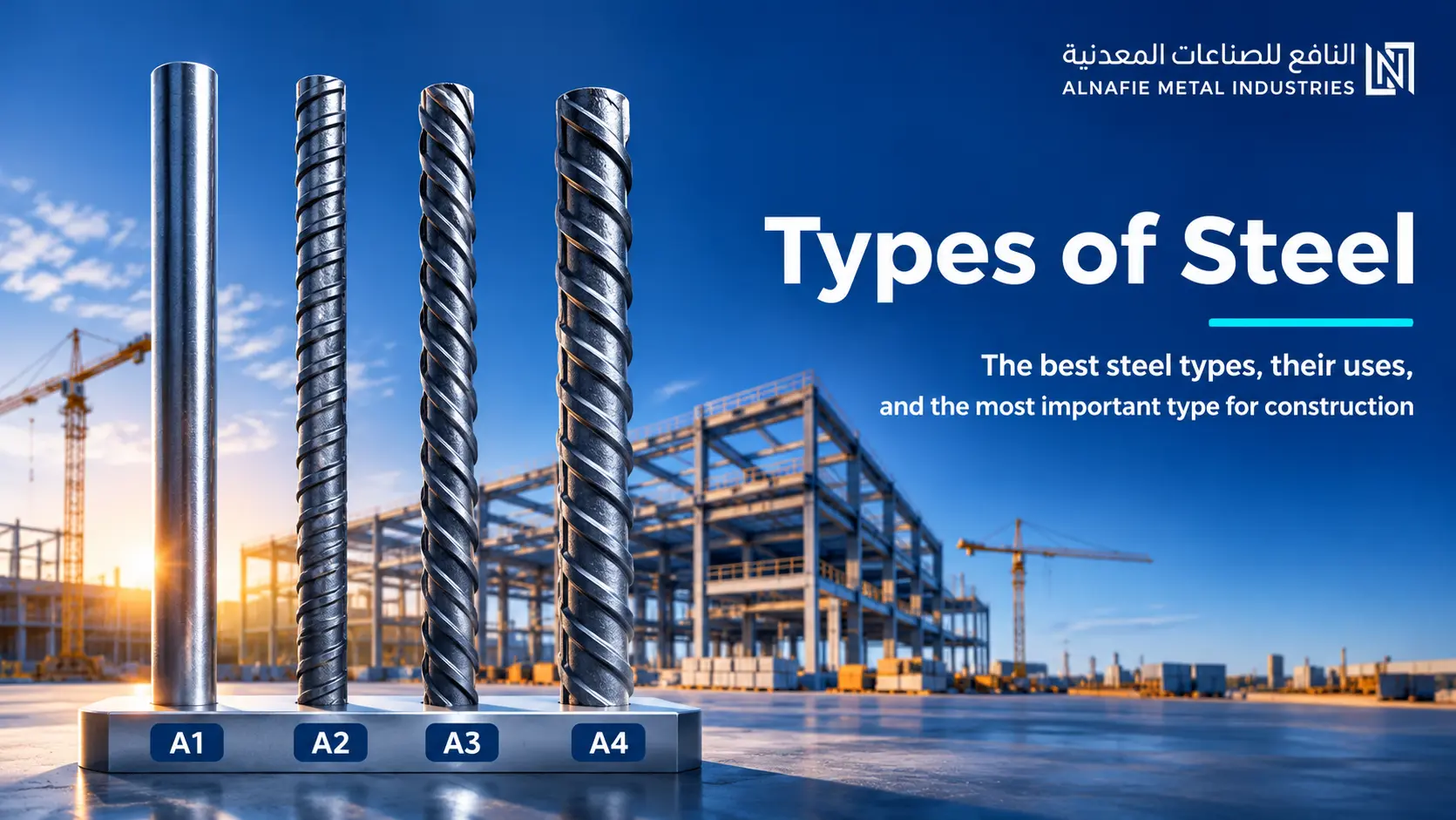
Rebar is ribbed carbon steel bar cast inside concrete to carry tensile loads. In Saudi Arabia the common specification is Grade 60 to the American standard, with a minimum yield strength of about 420 MPa. Rebar can be supplied black, galvanized or epoxy coated for aggressive environments. Learn more on our rebar and epoxy-coated rebar page.
A quick weight rule for rebar: weight in kg per metre equals the diameter in mm squared, divided by 162. A 16 mm bar weighs about 1.58 kg/m, and a 25 mm bar about 3.86 kg/m.
Types of Steel by Product Form
When you speak to a supplier, they will ask about form and size more than chemistry. These are the main product forms:
- Plates and sheets: flat products in many thicknesses, available in black, galvanized and stainless. Used for tanks, cladding, enclosures and equipment. Read our overview of sheet metal and plate works.
- Steel beams: I-beams, H-beams and channels for frames and floors.
- Steel bars: round, square and flat bars for machining, gates and brackets, plus deformed rebar for concrete.
- Steel pipes and hollow sections: circular pipes for fluids and square or rectangular hollow sections for structures and fencing. See our piping works and metal pipes.
Types of Steel by Surface Protection
Black Steel
Uncoated steel with its natural mill finish. It is the cheapest option but needs painting or coating if exposed to humidity.
Galvanized Steel
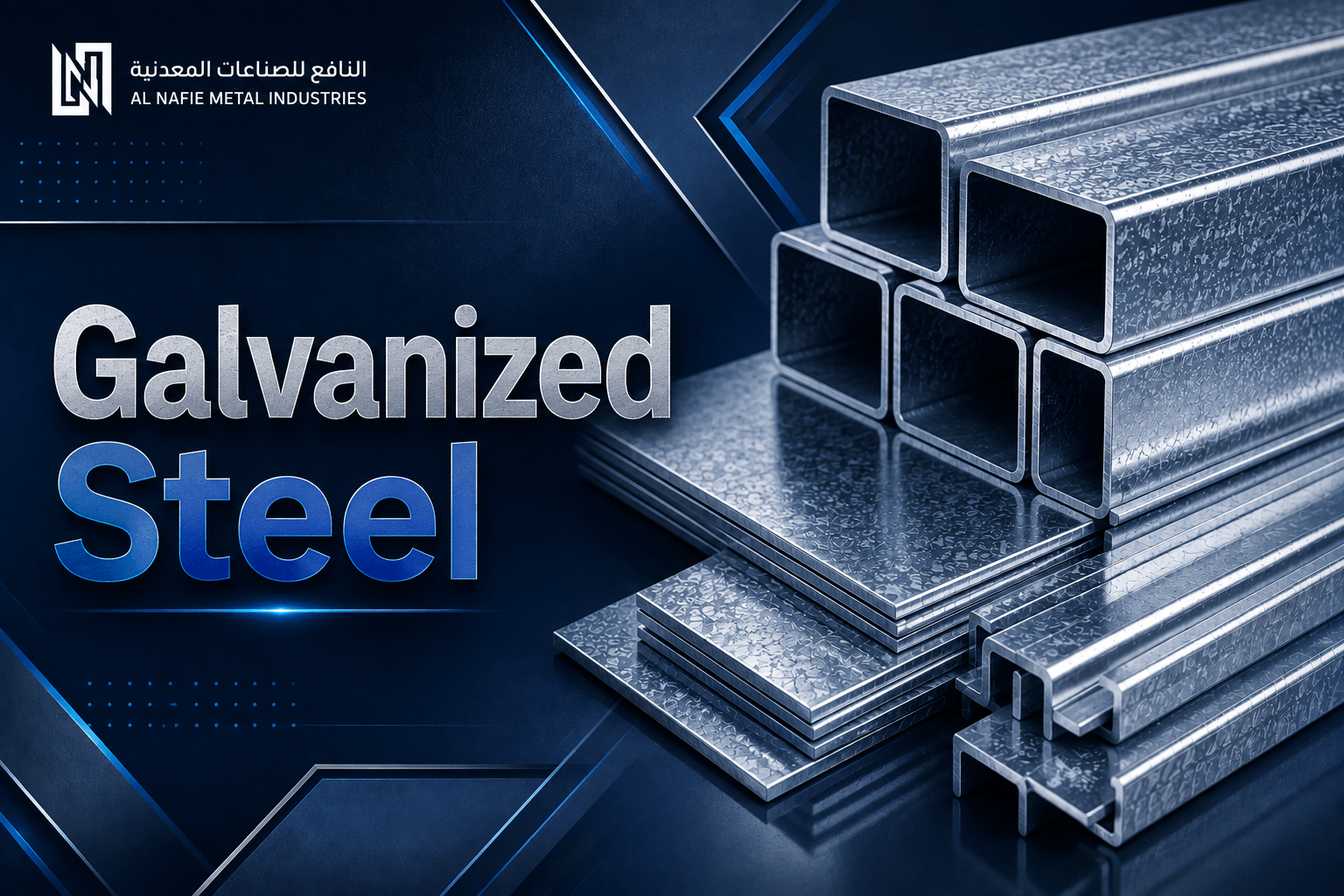
Steel coated with zinc. The zinc acts as a barrier and also corrodes sacrificially to protect any scratched area. Hot dip galvanizing suits fabricated parts, while continuous galvanizing is used for coil and sheet. Our full guide on galvanized steel types, uses and cost explains how distance from the coast changes the coating life.
How to tell if steel is galvanized: look for a dull grey or spangled surface, measure coating thickness with a gauge, and ask for the galvanizing certificate.
Coated and Painted Steel
Epoxy and industrial paint systems protect steel in plants and coastal sites. Coating life depends heavily on surface preparation, which is why abrasive blasting before coating and proper metal finishing are critical steps.
Steel Grades Chart
Here is a simple reference chart for the steel grades you are most likely to see on Saudi drawings and quotations:
| Grade | Type | Approx. minimum yield | Typical use |
|---|---|---|---|
| ASTM A36 | Structural carbon steel | 250 MPa | Beams, plates, general structures |
| S275 | Structural carbon steel | 275 MPa | Frames and fabrication |
| S355 | Structural carbon steel | 355 MPa | Heavier structures and bridges |
| ASTM A572 Gr 50 | High strength low alloy | 345 MPa | Towers and long-span frames |
| ASTM A615 Gr 60 | Rebar | 420 MPa | Reinforced concrete |
| 304 | Austenitic stainless | Varies by form | Food, water, general corrosion |
| 316 / 316L | Austenitic stainless with Mo | Varies by form | Coastal, chemical, marine |
| 430 | Ferritic stainless | Varies by form | Decorative and appliance panels |
Always confirm the exact grade and standard on the project specification and the mill test certificate.
Which Type of Steel Is Strongest?
It depends on what “strong” means:
- Hardest: heat-treated tool steel and high carbon steel.
- Highest tensile strength in structures: high strength low alloy and quenched and tempered alloy steels.
- Best corrosion resistance: stainless steel, especially 316 and duplex grades.
- Best vibration damping in castings: grey and ductile cast iron.
For a real project, the “strongest” steel is the one that meets the specified grade with the right ductility and weldability for the job.
What Is the Most Used Type of Steel?
Low carbon (mild) steel is the most used type of steel by a wide margin. It is affordable, easy to fabricate and strong enough for most structures, which is why it forms the bulk of beams, sheets, pipes and rebar.
Stainless Steel Families Explained
Stainless steel is itself divided into families, and knowing them helps when a supplier quotes an unfamiliar grade:
- Austenitic (300 series, such as 304 and 316): the most common family. Excellent corrosion resistance, easy to weld and form, and generally non-magnetic when annealed.
- Ferritic (such as 430): chromium without nickel. Magnetic, cheaper, with moderate corrosion resistance, often used for decorative panels and appliances.
- Martensitic (such as 410 and 420): can be hardened by heat treatment, used for knives, valve parts and pump shafts.
- Duplex (such as 2205): a mix of austenitic and ferritic structures, giving higher strength and strong resistance to chloride attack. Popular in seawater and oil and gas service.
Types of Steel Across Saudi Industrial Sectors
Different sectors in the Kingdom lean on different types of steel, and seeing the pattern makes selection easier:
| Sector | Types of steel commonly specified | Why |
|---|---|---|
| Petrochemicals and refining | Carbon steel, alloy steel, stainless and duplex | Pressure, temperature and corrosive media |
| Water and desalination | 316L, duplex, coated carbon steel | Chlorides and seawater |
| Food and beverage | 304 and 316 stainless | Hygiene and cleanability |
| Power and utilities | Galvanized structural steel | Long outdoor exposure |
| Cement and heavy industry | Wear resistant and structural carbon steel | Abrasion and heavy loads |
| Logistics and warehousing | Structural mild steel with coatings | Long spans at low cost |
For a closer look at sector demands, read our guides to petrochemicals in Saudi Arabia and manufacturing industries in Saudi Arabia. Both show how the right types of steel reduce downtime and maintenance over a plant’s life.
How to Choose the Right types of Steel for Your Project in Saudi Arabia
Choosing between the different types of steel comes down to a few practical questions:
- Where will it live? Coastal cities like Jeddah and Dammam have high humidity and salt, so plan for galvanizing, coating or stainless. Dry inland sites are less aggressive.
- What load does it carry? Structural members need certified structural grades, and wear parts need harder steel.
- How will it be fabricated? Heavy welding favours low carbon steel. Precision profiles benefit from laser metal cutting, and curved parts need metal rolling or metal bending.
- Does it touch food or drinking water? Use food grade stainless steel.
- Is it certified? Ask for a mill test certificate with a heat number that matches the material, and check compliance with SASO requirements.
Common Mistakes When Selecting Steel
- Buying on price alone: black steel is cheaper than galvanized, but in a humid coastal climate the painting and maintenance can cost more within a few years.
- Mixing metals without isolation: fixing stainless directly to carbon steel in wet conditions can cause galvanic corrosion of the carbon steel.
- Ignoring weldability: high carbon steel in a heavily welded part invites cracking unless an approved procedure is followed.
- Forgetting the inside of hollow sections: unsealed tubes can corrode from the inside out.
- Accepting vague descriptions: “high quality steel” means nothing technically. Specify the grade and standard.
How Alnafie Metal Industries Works With Different types of Steel
Knowing the types of steel is half the job. The other half is turning the right material into a finished, compliant product. At Alnafie Metal Industries we fabricate carbon steel, galvanized steel and stainless steel through cutting, iron cutting to size, bending, rolling, welding and finishing. Our work includes industrial storage tanks, security fencing systems, and galvanized structures such as the electricity towers project in Abha.
Have a drawing or a material question? Contact our team and we will help you pick the right steel for your project with best metal industries company in saudi arabia.
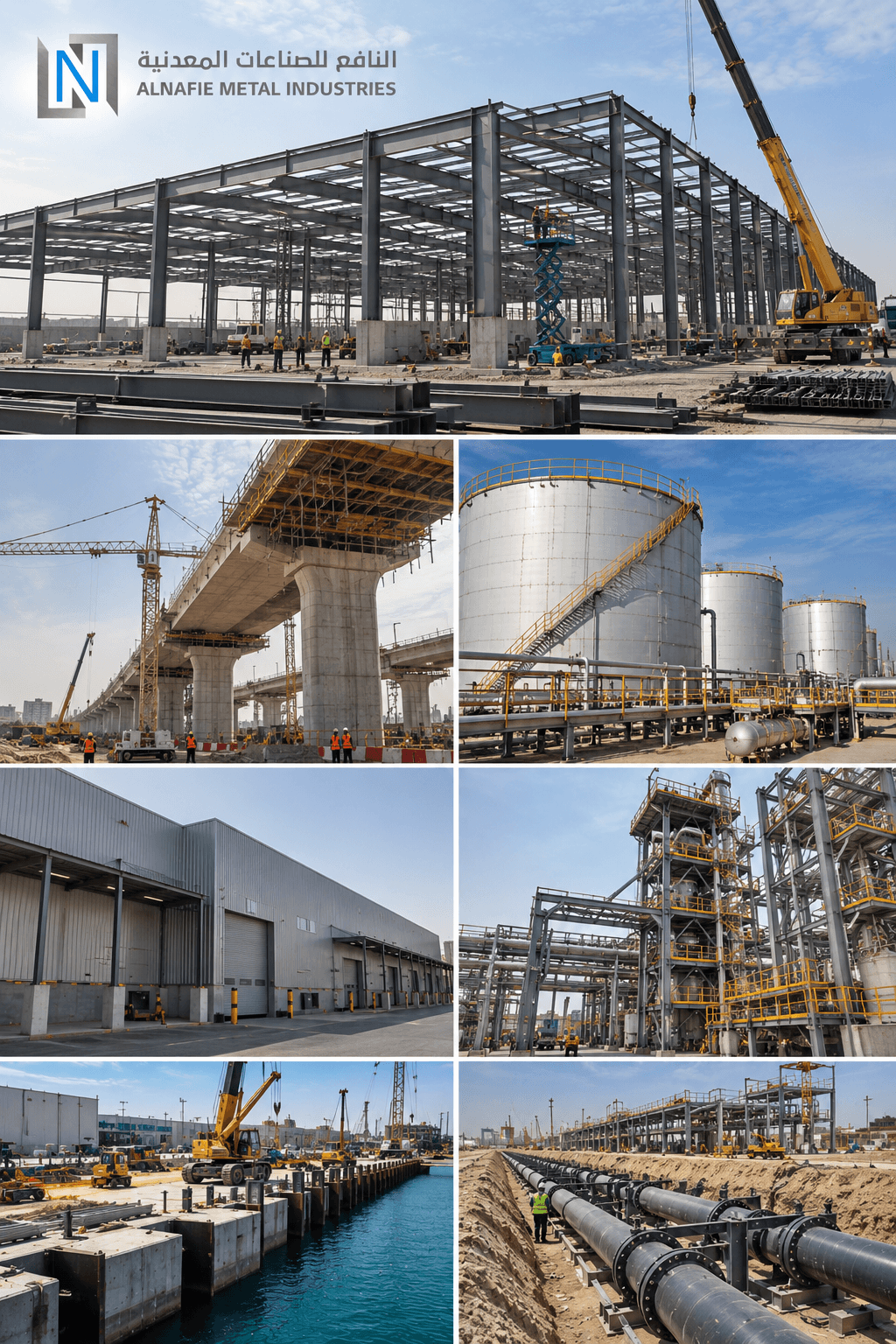
Planning an Industrial Project? Alnafie Can Fabricate and Erect It
Steel structures, storage tanks, piping and static equipment for power, petrochemical and industrial plants.
Alnafie Metal Industries
Metal fabrication in Jeddah · 500+ employees · 144,000 m² of facilities
ISO 9001 • ISO 14001 • ISO 45001 • ASMEFrequently Asked Questions About Types of Steel
What are the different types of steel?
The main types of steel are carbon steel, alloy steel, stainless steel and tool steel. Carbon steel is further divided into low, medium and high carbon grades, and each type comes in many product forms and grades.
What are the four types of steel?
Carbon steel, alloy steel, stainless steel and tool steel. They differ mainly in the elements added to iron and carbon.
Which type of steel is strongest?
Heat-treated tool steel is the hardest, high strength alloy steels have the highest tensile strength in structures, and stainless steel offers the best corrosion resistance. The right choice depends on the type of strength you need.
What is the most used type of steel?
Low carbon steel, also called mild steel. It is affordable, easy to weld and used for most beams, sheets, pipes and rebar.
What are the main types of iron?
Pig iron, cast iron and wrought iron. Cast iron itself includes grey, white, ductile and malleable types.
What is the difference between iron and steel?
Steel is iron with a controlled carbon content of up to about 2%. It is stronger and tougher than pure iron and more ductile than cast iron, which has more than about 2% carbon.
Which is better, carbon steel or cast iron?
Carbon steel is better for structures, welded parts and pressure piping because it is stronger and more ductile. Cast iron is better for complex castings that need vibration damping or wear resistance.
What are the disadvantages of carbon steel?
Carbon steel rusts without protection, and higher carbon grades are harder to weld and more brittle. Coatings, galvanizing or a switch to stainless steel solve the corrosion issue.
about
Alnafie Metal Industries
AlNafie Metal Industries is a leading private company with 33 years of experience in Saudi Arabia’s development. Specializing in steel construction and tank rehabilitation, NMI provides full steel fabrication and erection services for major EPC projects, including power, gas, petrochemical, industrial, and commercial sectors.