Scrap metal is one of the most searched industrial topics in Saudi Arabia. Homeowners want to clear old appliances, contractors want value from demolition steel, and factories generate offcuts every day. The questions are always the same: what is it worth, how do I sell it properly, and where does it go next?
This guide focuses on ferrous scrap, meaning iron and steel, which makes up most of the scrap by weight. It explains the main grades, how to sort and estimate value, what drives prices, how to sell through licensed channels and how scrap is recycled into new steel. It draws on our experience in steel fabrication at Alnafie Metal Industries, where cutting and forming steel generates offcuts daily and every kilogram of material matters.
What Is Called Scrap Metal?
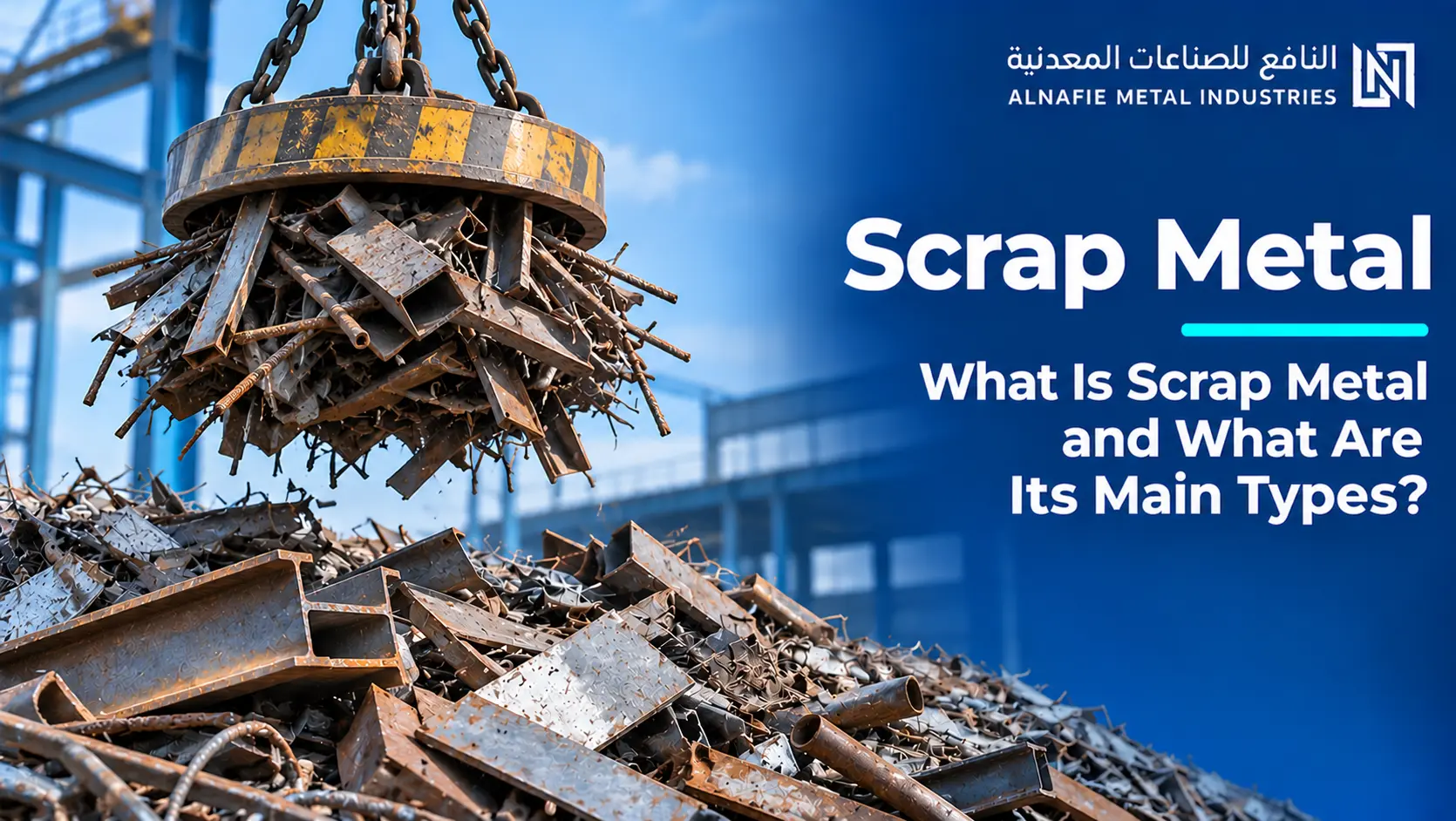
Scrap metal is any metal that has reached the end of its useful life or is left over from manufacturing, and that can be melted and reused as raw material. It is split into two families:
- Ferrous scrap: contains iron. Most of it is magnetic, including carbon steel, rebar and cast iron. Prices per kilogram are lower, but volumes are huge.
- Non-ferrous scrap: contains no iron, such as copper, aluminium, brass and lead. It is not magnetic and is worth far more per kilogram.
Stainless steel is a special case: it is ferrous, yet the common grades are largely non-magnetic, and it is worth much more than ordinary steel because of its nickel and chromium content.
Where Does Ferrous Scrap Metal Come From?
- Demolition and construction: rebar, beams, pipes and sheet.
- Factory and workshop offcuts: the cleanest scrap of all.
- Old machinery and equipment: pumps, tanks, cranes and machine bases.
- End-of-life vehicles: bodies, frames and engine blocks.
- Household appliances and furniture: washing machines, fridges, beds and cabinets.
- Industrial upgrades: dismantled pipework, vessels and structures.
Scrap Metal Terms You Will Hear
Knowing the trade vocabulary speeds up pricing and avoids misunderstandings:
- Ferrous and non-ferrous: the basic split between iron-based metals and everything else.
- HMS (heavy melting steel): thick, furnace-ready steel, graded by thickness and length.
- Shredded: steel fragmented into small, uniform pieces by large shredders.
- Busheling or prompt scrap: clean new offcuts from manufacturing.
- Obsolete scrap: metal from buildings, machines or vehicles at the end of their life.
- Turnings: chips from machining, often oily.
- Yield: the share of the load that ends up as liquid steel after melting.
The more precisely you describe your scrap metal with these terms, the faster and clearer the quotation.
Why Recycling Beats Landfill
Steel sent to landfill is lost as a resource, corrodes slowly and occupies space. Recycled steel returns to industry as raw material of near-original quality, easing pressure on mining, reducing the energy needed for steelmaking and shrinking the waste that must be buried. That is why waste regulation in the Kingdom pushes toward sorting and recycling instead of uncontrolled disposal.
Scrap Metal and Saudi Industrial Growth
As construction and industrial projects expand across the Kingdom, the volume of steel entering the market grows, and so does the scrap metal generated by demolition, replacement and fabrication. The shift toward a circular economy and a regulated waste sector makes scrap management part of project planning from the start, not an afterthought at handover. Contractors and plant owners who plan for segregation, documentation and licensed recycling recover more value and face fewer compliance surprises. For context on sector demands, see our guide to petrochemicals in Saudi Arabia, where large shutdowns and upgrades generate significant volumes of scrap metal.
What Is Scrap Metal Used For?
Iron and steel can be recycled repeatedly without losing their essential properties. Scrap is melted, mainly in electric arc and induction furnaces, then refined, cast and rolled into new rebar, sections, sheet and castings. The rebar removed from a demolished building today can be reinforcing a new one within months.
Recycling saves natural resources, uses considerably less energy than making steel from ore, and keeps metal out of landfill. It also supports the circular economy goals that Saudi Arabia is building into its waste management and industrial strategies. For the difference between steel mills that melt scrap and fabrication shops like ours, see our steel fabrication buyer guide.
Scrap Steel: What It Is and Why Mills Value It
Scrap steel is the part of ferrous scrap metal that comes from steel products rather than cast iron: beams, plates, rebar, pipes, sheet, machine frames, car bodies and fabrication offcuts. Because steel is iron with a controlled amount of carbon, scrap steel melts down into a predictable base that steelmakers can adjust to a new grade with relatively little refining.
In everyday trade, people often use scrap steel and scrap iron as if they meant the same thing. Technically they differ: cast iron scrap has 2% to 4% carbon and is graded and priced separately, while scrap steel has much lower carbon and makes up most of the ferrous material collected from buildings, factories and vehicles.
Steel mills value scrap steel for four main reasons:
- Electric arc furnace feedstock: electric furnaces melt scrap directly, and in the region they often combine it with direct reduced iron to produce new rebar and sections.
- Known chemistry: clean offcuts and structural sections have a predictable composition, which reduces refining time and cost.
- High yield: thick, dense scrap steel loses little to oxidation, so more of each tonne becomes liquid steel.
- Lower energy use: melting scrap needs far less energy than making steel from ore.
Not all scrap steel is equal, though. Mills watch for residual elements such as copper and tin, which come from wiring, motors and coated parts mixed into loads. These elements cannot be removed easily during melting and can weaken new steel, which is why yards penalise contaminated loads and pay more for clean, sorted material. Size and density matter too: pieces cut to furnace size and free of concrete, rubber and oil earn the best rate.
Ferrous Scrap Metal Grades
| Grade | Description | Relative value |
|---|---|---|
| Heavy melting steel (HMS 1 and 2) | Thick plate, beams, heavy bars, cut to furnace size | High |
| Light scrap | Thin sheet, appliances, light structures | Lower |
| New production scrap (busheling) | Clean offcuts from fabrication and stamping | High, clean and known chemistry |
| Plate and structural | Heavy sections and plate cut to size | High |
| Rebar scrap | Bars from demolition or site leftovers | Medium to high, depends on concrete content |
| Shredded scrap | Fragmented by shredders into uniform pieces | Depends on density and cleanliness |
| Cast iron scrap | Machine bases, old pipes, manhole covers | Priced separately |
| Turnings and borings | Machining chips | Low, light and often oily |
| Stainless steel scrap | 304, 316 and other grades | Much higher than carbon steel |
| Galvanized scrap | Zinc-coated sheet and pipe | Varies by melt shop |
Heavy vs Light Scrap Metal
The main market split is thickness. Heavy melting steel is dense, gives a high yield in the furnace and loses little to oxidation, so it earns a higher price. Light scrap is thin, burns off more during melting and often comes mixed with other materials, so it earns less.
Factory Offcuts
Offcuts from cutting and forming are among the best ferrous scrap: clean, of known grade and free from heavy coatings. Well-planned shops also produce less of it in the first place, because parts are nested efficiently on each sheet, as with laser metal cutting.
Rebar Scrap
Its value depends heavily on how clean it is. Concrete stuck to bars adds weight with no value, and most yards deduct for it or reject it. Learn about the product itself on our rebar page.
Cast Iron Scrap
Cast iron has high carbon content, so it is handled as its own category, and foundries often prefer it for new castings. Our guide to types of steel explains how cast iron differs from steel. Our cast iron guide explains the types and properties.
Stainless Steel Scrap
Because of its nickel and chromium, stainless scrap is worth far more than carbon steel. Grades such as 304 and 316 are largely non-magnetic, so people sometimes mistake them for aluminium. Our stainless steel guide explains the grades.
Galvanized Scrap
Zinc coatings create fumes during melting, so some melt shops treat galvanized scrap cautiously and price it differently. Read more in our guide to galvanized steel.
How to Identify the Scrap Metal You Have
- Magnet test: strong attraction means carbon steel or cast iron; no attraction means non-ferrous or austenitic stainless.
- Colour and surface: carbon steel rusts reddish brown, stainless stays silvery, copper is reddish, aluminium is light grey and light.
- Weight: aluminium is much lighter than steel of the same size.
- Fracture: cast iron breaks with a grey, grainy surface; steel bends before breaking.
- Source: manhole covers and old machine bases are usually cast iron; sinks and kitchen equipment are usually stainless; electrical cables are copper or aluminium.
For large or valuable lots, many yards use handheld analysers that identify the alloy in seconds.
How to Sort Scrap Metal for the Best Price
Scrap metal yards price mixed loads at the lowest grade in the pile, so sorting pays:
- Separate non-ferrous metals: copper, aluminium and brass go in their own piles.
- Separate stainless: use a magnet and visual checks.
- Split heavy from light: thick sections apart from thin sheet.
- Separate cast iron: it is priced as its own grade.
- Remove contaminants: wood, plastic, rubber, concrete and fabric.
- Drain fluids: tanks and machinery must be empty of oil, fuel and chemicals.
- Cut large pieces if you can: yards deduct for cutting oversize items.
How to Calculate Scrap Metal Value
The formula is simple: weight multiplied by the price per kilogram for that grade. The challenge is estimating weight before the weighbridge. Steel density is about 7.85 g/cm³, or roughly 7,850 kg per cubic metre:
- Plate: length (m) × width (m) × thickness (mm) × 7.85 = weight in kg. A 1 × 2 m plate, 5 mm thick, weighs about 78.5 kg.
- Rebar: kg per metre equals diameter in mm squared divided by 162. A 16 mm bar weighs about 1.58 kg/m.
- Pipe: use the round pipe formula in our steel pipe guide.
This gives a solid basis for negotiation, but the final figure is always the certified scale reading.
Scrap Metal Price in Saudi Arabia: What Drives It?
There is no fixed rate. Prices change daily or weekly and depend on:
- International scrap and steel markets: local prices follow global benchmarks.
- Local steel mill demand: when melt shops increase output, demand and prices rise.
- Grade: heavy beats light, and clean offcuts beat mixed loads.
- Cleanliness: anything that is not metal is deducted from weight or reduces the rate.
- Quantity: larger lots get better rates per tonne.
- Location and transport: distance to the yard or mill affects the net price.
- Collection terms: if the buyer collects, transport and loading are deducted.
Scrap metal prices often differ between yards in the same city, so never accept the first offer.
What Is the Price of 1 kg of Scrap Metal?
It depends on the grade, cleanliness and quantity on the day. Heavy, clean steel always earns more than light or mixed scrap, and stainless earns more than both. Ask several licensed yards for same-day quotes for your specific grade.
Scrap Metal Price Range in Saudi Arabia (November 2026)
These figures come from published buying prices of Saudi scrap yards and price sites in late 2026. They vary because sources differ in city, quantity, cleanliness and whether the yard collects:
| Scrap type | Approx. price per kg | Approx. price per ton |
|---|---|---|
| Clean heavy melting steel | SAR 0.90–1.80 | SAR 900–1,800 |
| Used rebar | SAR 0.75–0.95 | SAR 750–950 |
| Cast iron | SAR 0.80–1.75 | SAR 800–1,750 |
| Light steel and sheet | SAR 0.60–1.30 | SAR 600–1,300 |
| Galvanized steel | Close to light steel, some yards up to about SAR 1.40 | Up to about SAR 1,400 |
| Stainless steel scrap | SAR 2.50–6.00 | SAR 2,500–6,000 |
Most recent sources put ordinary ferrous scrap at around SAR 1,000–1,500 per ton, depending on grade and quality.
Example: 500 kg of heavy steel at SAR 0.90 per kg is worth SAR 450 before deductions. The same quantity, clean and sorted, at SAR 1.40 per kg is worth SAR 700, which shows why sorting and cleaning pay.
These figures are indicative and change daily. Get several same-day quotes from licensed yards before selling.
How to Sell Scrap Metal Properly
- Sort and clean the material as described above.
- Estimate the weight so you know the approximate value before negotiating.
- Get several quotes from licensed, reputable yards.
- Check licensing: waste collection, transport, sorting and treatment activities in Saudi Arabia fall under the Waste Management Law and the oversight of the National Center for Waste Management (MWAN). Dealing with licensed operators protects you.
- Attend the weighing on a certified scale and see the reading yourself.
- Get a receipt or invoice showing grade, weight, rate and date.
- Expect ownership checks: reputable buyers may ask for proof of ownership for certain items. That protects everyone.
Questions to Ask a Scrap Metal Yard
- Do you hold a valid licence for scrap collection and processing?
- Which grades do you buy, and what is today’s rate for each?
- Is the scale certified, and can I attend the weighing?
- How do you calculate deductions for contamination?
- Who handles loading and transport, and is it deducted?
- Will you issue an official receipt or invoice?
Does Rust or Paint Reduce Scrap Metal Prices?
Light surface rust is normal in old scrap and usually attracts little deduction, because the steel underneath is still there. Deep corrosion that has eaten into the thickness reduces real metal weight and furnace yield, so the material may be graded as light or mixed. Heavy paint, insulation and attached rubber burn off in the furnace and create fumes, so many buyers deduct for them. Removing heavy coatings before sale raises value on large lots.
Household Scrap Metal: What Is Worth Selling?
- Large appliances: washing machines, fridges and ovens, mostly light steel.
- Old air conditioners: steel casings, copper tubing and coils, aluminium fins. Dismantling and sorting raises value.
- Water heaters: steel bodies, sometimes with copper parts.
- Metal furniture: beds, cabinets, shelving and chairs.
- Old steel doors and windows.
- Garden tools and hand equipment.
Appliances containing refrigerant gas or oil must be emptied safely before dismantling; leave them to specialists.
Construction Site Scrap Metal: Tips for Contractors
- Set aside a scrap area from day one so steel does not mix with general waste.
- Keep rebar offcuts clean and away from concrete and soil.
- Collect sheet and section offcuts separately, since they are clean and valuable.
- Record every load leaving site by weight, date and receiver.
- Agree terms in advance with a licensed operator on pricing, loading and collection.
On large demolition jobs, planning the dismantling sequence so steel is separated from concrete on site increases scrap value and reduces disposal cost for everything else.
Scrap Metal From Factories and Large Projects
For manufacturers and contractors, scrap is a revenue stream that can be managed:
- Segregated bins: heavy, light, stainless and non-ferrous.
- Periodic contracts with licensed recyclers, priced against a clear benchmark and reviewed regularly.
- Documented weights for every shipment.
- Less waste at source: planned cutting and nesting reduce offcuts, as in organized iron cutting to size.
When old tanks or structures are dismantled, correctly sorted scrap can offset part of the project cost. See how these assets are built in our industrial storage tanks and steel structures. Even dismantled sandwich panels have scrap value once the steel skins are separated from the insulation core.
End-of-Life Vehicles and Heavy Equipment
- Official procedures: vehicles have formal deregistration requirements that must be completed with the relevant authorities before dismantling.
- Fluid removal: fuel, oils, coolant and brake fluid must be drained safely.
- Component separation: batteries are regulated as hazardous waste, tyres are a separate waste stream, and engines contain aluminium and cast iron.
- Heavy equipment: cranes and excavators are mostly heavy steel and cast iron, and well-sorted parts carry good value.
How Is Scrap Metal Recycled Into New Steel?
- Collection from homes, sites, factories and vehicles.
- Sorting by hand, magnets and sometimes alloy analysers.
- Preparation: shearing large pieces, baling light scrap and shredding some grades.
- Transport to melt shops or foundries.
- Melting in electric arc or induction furnaces.
- Refining to remove impurities and adjust chemistry to the target grade.
- Casting into billets, blooms or slabs.
- Rolling into rebar, sections, sheet or other products.
The new steel returns to the market and the cycle repeats.
Safety When Handling Scrap Metal
- Sharp edges: always wear gloves and safety boots.
- Heavy pieces: use lifting equipment, not manual handling.
- Tanks and cylinders: may contain flammable gas or liquid; never hot-cut without full draining and ventilation.
- Batteries and electronics: often classed as hazardous waste with specific rules.
- Dust and rust: use a mask when handling large volumes.
Common Mistakes When Selling Scrap Metal
- Selling mixed loads: everything is priced at the lowest grade.
- Leaving stainless and copper with carbon steel: a large loss in value.
- Selling without knowing the weight: the estimate is left entirely to the buyer.
- Dealing with unlicensed operators: may expose you to regulatory problems.
- Not draining tanks and machinery: oils and fuel are hazardous and can cause rejection.
- No receipt: no proof of quantity or price.
Our Experience Working With Steel
Alnafie Metal Industries handles steel at every stage, from receiving raw material to cutting, forming, welding and finishing. That gives us a practical view of the value of every kilogram, how planning reduces waste, and how offcuts should be sorted by grade. Learn more about our manufacturing industries guide, or contact our team about a fabrication project.
Planning an Industrial Project? Alnafie Can Fabricate and Erect It
Steel structures, storage tanks, piping and static equipment for power, petrochemical and industrial plants.
Alnafie Metal Industries
Metal fabrication in Jeddah · 500+ employees · 144,000 m² of facilities
ISO 9001 • ISO 14001 • ISO 45001 • ASMEFrequently Asked Questions About Scrap Metal
What is the current scrap price in Saudi Arabia?
It changes daily with global markets, local mill demand, grade, cleanliness and quantity. Contact several licensed yards in your city and compare same-day quotes for your grade.
What is scrap used for?
It is melted and refined to make new steel and castings, such as rebar, sections, sheet and machine parts, reducing the need for new ore.
What is called scrap metal?
Any metal at the end of its useful life or left over from production that can be recycled. It is divided into ferrous (iron and steel) and non-ferrous (copper, aluminium and others).
Is iron worth anything for scrap?
Yes. Iron and steel scrap is traded in large volumes. Its price per kilogram is lower than non-ferrous metals, but clean, heavy, sorted steel earns a fair rate, especially in quantity.
How to calculate scrap price?
Multiply the weight by the price per kilogram for the grade. Estimate weight from dimensions and steel density, then confirm on a certified scale.
What is the price of 1 kg of iron?
It varies daily by grade and market. Heavy, clean steel earns more than light or mixed scrap, so sort before you ask for quotes.
How is steel scrap recycled?
It is collected, sorted, sheared or baled, melted in electric furnaces, refined, cast and rolled into new products.
What is the difference between ferrous and non-ferrous scrap?
Ferrous scrap contains iron and is mostly magnetic and lower in price per kilogram. Non-ferrous scrap, such as copper and aluminium, contains no iron and is worth far more per kilogram.
about
Alnafie Metal Industries
AlNafie Metal Industries is a leading private company with 33 years of experience in Saudi Arabia’s development. Specializing in steel construction and tank rehabilitation, NMI provides full steel fabrication and erection services for major EPC projects, including power, gas, petrochemical, industrial, and commercial sectors.